Breathe, Move, Thrive: My Qigong Journey to Daily Calm and Strength
Ever felt stuck in the rush of life, with stress creeping into your body and mind? I did—until I discovered qigong. This ancient practice quietly transformed my mornings, energy, and focus. No flashy workouts or extreme diets, just simple movements and breathwork. In this article, I’ll walk you through how a gentle, consistent qigong routine can bring real, noticeable changes—without overwhelm or hype. It’s not about pushing harder; it’s about moving with awareness, breathing with purpose, and reclaiming a sense of calm that radiates through every part of daily life.
The Burnout That Led Me to Qigong
For years, I believed that wellness meant intensity. I followed structured fitness plans, counted steps, drank green juices, and tried every trend that promised more energy. Yet, despite eating well and exercising regularly, I often felt drained by mid-afternoon. My mind was foggy, my lower back ached after long days at the desk, and I struggled to fall asleep even when exhausted. I wasn’t sick, but I wasn’t truly well either. The constant pressure to do more, be more, and move faster had taken a quiet toll—one I didn’t fully recognize until I hit a wall.
One evening, while listening to a wellness podcast, I heard a guest describe qigong as a ‘reset button’ for modern life. I was skeptical. The idea of slow, flowing movements and standing still for minutes at a time sounded almost too simple. How could something so gentle make a difference? But desperation led me to try. That night, I followed a five-minute guided practice: standing with feet shoulder-width apart, hands resting gently on my lower abdomen, and breathing deeply into my belly. I wasn’t asked to stretch or sweat—just to pay attention. And within minutes, something shifted. My shoulders relaxed. My breath slowed. For the first time in weeks, my mind wasn’t racing ahead to tomorrow’s to-do list. I felt grounded. Not fixed, not cured—but present. That small moment planted a seed.
What Exactly Is Qigong? (And Why It’s Not Just “Slow Exercise”)
Qigong (pronounced “chee-gong”) is a mind-body practice with roots in Traditional Chinese Medicine, dating back thousands of years. The word combines “qi,” meaning vital energy or life force, and “gong,” meaning cultivation or practice. At its core, qigong is about harmonizing the body, breath, and mind to support the smooth flow of energy throughout the system. Unlike high-intensity workouts that deplete energy, qigong replenishes it. It’s not about building muscle or burning calories—it’s about cultivating balance.
The practice integrates three essential elements: regulated breathing, gentle physical movement, and mindful intention. Each movement is coordinated with the breath, and each breath is guided by awareness. This triad works together to calm the nervous system, improve circulation, and enhance mental clarity. While it may resemble tai chi or yoga in appearance, qigong is distinct. Tai chi is often practiced as a martial art with longer, choreographed forms, while yoga emphasizes flexibility and postures rooted in Indian philosophy. Qigong, by contrast, focuses specifically on energy regulation and is often simpler to learn, making it highly accessible for beginners.
From a scientific standpoint, qigong aligns with what we now understand about the mind-body connection. Controlled, diaphragmatic breathing activates the parasympathetic nervous system—the body’s ‘rest and digest’ mode—helping to lower heart rate and reduce cortisol levels. Gentle, repetitive movements stimulate circulation and joint mobility without strain. Studies have shown that regular qigong practice can lead to measurable improvements in stress markers, sleep quality, and mood regulation. It’s not mystical—it’s physiological.
Why Modern Life Screams for This Ancient Practice
Today’s lifestyle is fundamentally at odds with the body’s natural rhythms. Most adults spend hours each day seated, staring at screens, responding to notifications, and multitasking under mental load. This constant state of low-grade stress keeps the sympathetic nervous system—the ‘fight or flight’ response—partially activated, even when no real danger is present. Over time, this leads to what some researchers call ‘allostatic load,’ a wear-and-tear effect on the body that contributes to fatigue, poor sleep, and reduced resilience.
Additionally, modern habits disrupt the body’s energy flow. Poor posture from prolonged sitting compresses the chest and diaphragm, limiting breath depth. Mental overload scatters attention, making it difficult to focus or relax. Without intentional movement and breath, energy becomes stagnant, much like water in a pond with no current. This stagnation can manifest as physical tension, emotional irritability, or mental fog—all symptoms I experienced long before I understood their source.
Qigong offers a counterbalance. Its rhythmic, low-impact movements encourage circulation of blood and energy, while deep breathing signals safety to the brain. Unlike intense exercise, which can add stress to an already taxed system, qigong supports recovery. Research published in journals such as the Journal of Alternative and Complementary Medicine has linked qigong practice to significant reductions in anxiety, improvements in sleep efficiency, and enhanced cognitive performance. These benefits aren’t achieved overnight, but through consistent, gentle practice.
One of the most compelling aspects of qigong is its ability to meet people where they are. You don’t need stamina, flexibility, or special equipment. Whether you’re recovering from illness, managing chronic pain, or simply feeling overwhelmed, qigong can be adapted to your capacity. It’s not about performance—it’s about presence. In a world that glorifies busyness, this practice quietly reminds us that stillness is not idleness; it’s restoration.
My 10-Minute Morning Qigong Routine (Simple Enough for Beginners)
After my initial experience, I committed to a daily 10-minute routine. I chose mornings because I wanted to set a calm tone for the day, rather than reacting to stress as it built. My routine is simple, repeatable, and requires no equipment. I begin by standing barefoot on a yoga mat or carpet, feet shoulder-width apart, knees slightly bent, and spine naturally aligned. This stance, known as ‘standing like a tree,’ is foundational in qigong. It promotes grounding and postural awareness.
The first step is abdominal breathing. I place one hand on my belly and inhale slowly through the nose, allowing the abdomen to rise like a balloon. I exhale through the mouth, gently drawing the navel toward the spine. I repeat this for two minutes, focusing solely on the breath. This immediately shifts my nervous system from alert to calm.
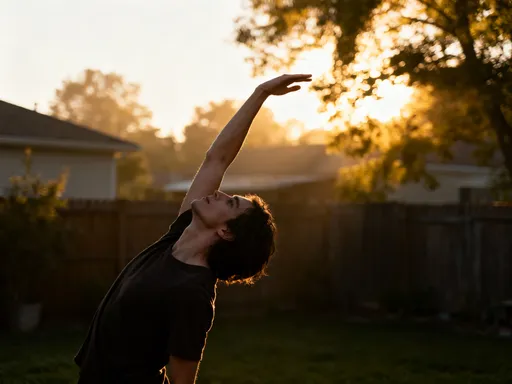
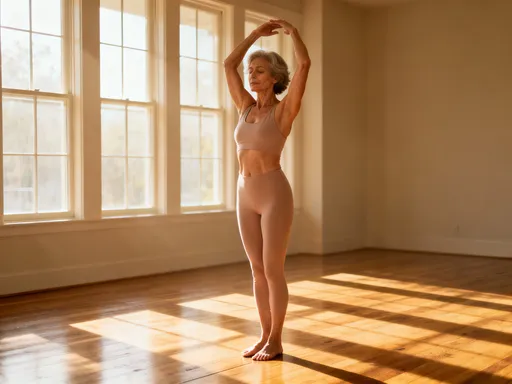
Next, I move into ‘lifting the sky.’ With palms facing up, I slowly raise my arms in front of me, then overhead, imagining I’m gently lifting a beam of light. At the top, I pause, fingertips reaching upward, then slowly lower my arms back down, palms turning to face the earth. This movement stretches the torso, opens the chest, and encourages full lung expansion. I repeat it six times, syncing each motion with my breath.
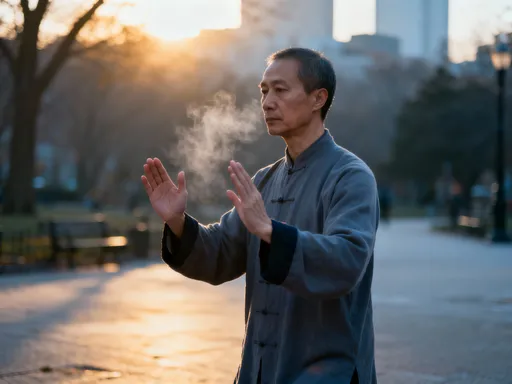
The third exercise is ‘parting the clouds.’ I raise my right arm to shoulder height, palm facing forward, as if pushing through a thick mist. Simultaneously, my left hand moves down to the side, palm facing back. I switch sides, left arm rising, right arm lowering, creating a flowing, wave-like motion. This movement promotes shoulder mobility and balance while engaging both sides of the body. I perform six repetitions per side.
I finish with a minute of standing meditation, returning to deep abdominal breathing. No music, no distractions—just stillness and awareness. Over time, this routine became as essential as brushing my teeth. I tied it to my morning coffee ritual: no coffee until after qigong. This small rule created consistency without pressure. On days I felt resistant, I reminded myself that even three minutes was better than none.
What Changed After 6 Weeks of Daily Practice
The shifts were subtle at first, but by the sixth week, they were undeniable. I began sleeping more deeply. Instead of waking at 3 a.m. with a racing mind, I stayed asleep through the night. My morning grogginess faded, and I no longer reached for a second cup of coffee by 10 a.m. The chronic tension in my lower back, which I had accepted as normal, began to ease. I attributed this to improved posture and relaxed muscle tone from the daily practice.
Emotionally, I noticed a new capacity to pause before reacting. When my child spilled juice on the carpet or a work email arrived late in the evening, my first impulse was no longer frustration. I felt a space between stimulus and response—a quiet buffer that allowed me to choose how to react. This wasn’t about suppressing emotions; it was about creating mental clarity. I felt more present during conversations, more patient with daily interruptions, and more connected to the rhythm of my own body.
Energy levels stabilized. I no longer experienced the 3 p.m. crash that used to send me searching for sugar or caffeine. My focus improved, especially during tasks that required sustained attention, like reading or planning meals. I didn’t feel ‘high’ or overly stimulated—just steady, grounded, and capable. These changes weren’t dramatic, but they were consistent. Qigong didn’t solve every problem, but it gave me a reliable tool to navigate them with greater ease.
How to Adapt Qigong to Your Life (No Mat or Studio Required)
One of the greatest strengths of qigong is its adaptability. You don’t need a special outfit, a quiet room, or even ten minutes. I’ve practiced in airport terminals, during work breaks, and while waiting for the kettle to boil. The core principles—breath, movement, and awareness—can be applied anywhere. Even standing in line, I’ll engage in subtle abdominal breathing and shoulder relaxation, turning idle moments into micro-practices.
On particularly busy days, I rely on a 3-minute reset: two minutes of deep belly breathing followed by one minute of gentle neck and shoulder rolls. This brief practice clears mental fog and reduces physical tension. I’ve also found that short qigong movements can be done at a desk. Seated spinal twists, wrist circles, and mindful breathing require no space and go unnoticed by coworkers.
For guidance, I use audio recordings from reputable sources, such as certified qigong instructors or wellness apps with science-informed content. I avoid programs that make exaggerated claims or promote quick fixes. Instead, I look for clear, step-by-step instruction that emphasizes safety and mindfulness. Occasionally, I attend virtual or in-person workshops with certified instructors to refine my form and deepen my understanding. These sessions are not mandatory, but they provide valuable feedback and motivation.
The key is to start small and stay consistent. You don’t need to master every movement or practice for long durations. Two minutes of intentional breathing is a success. The goal is not perfection—it’s integration. When qigong becomes a natural part of your day, like drinking water or stretching after sitting, it begins to deliver lasting benefits.
Why This Isn’t Just a Trend—It’s a Lifelong Practice
Qigong is not a quick fix or a passing wellness fad. In Traditional Chinese Medicine, it’s viewed as a preventive practice—a way to maintain health before problems arise. Unlike diets or fitness challenges that come and go, qigong is designed to be sustained over decades. Its low-impact nature makes it suitable for all ages and fitness levels, including older adults managing joint issues or recovering from injury.
As we age, maintaining mobility, balance, and mental clarity becomes increasingly important. Qigong supports all three. The gentle weight shifting improves proprioception and reduces fall risk. The focus on breath enhances lung capacity and cardiovascular health. The meditative aspect supports cognitive function and emotional resilience. Over time, the small daily investment compounds, much like saving money in a low-interest but steady account. The returns aren’t flashy, but they are real and lasting.
Perhaps most importantly, qigong teaches a different relationship with time and effort. In a culture that equates speed with success, this practice honors slowness as a form of strength. It reminds us that healing doesn’t always require force. Sometimes, the most powerful action is a deep breath, a mindful step, or a moment of stillness. By embracing these quiet moments, we cultivate a deeper connection to ourselves and a greater capacity to meet life’s demands with grace.
Wellness isn’t about intensity—it’s about intention. It’s not about doing more, but about being present. Qigong has taught me that true strength isn’t found in how fast I move or how much I accomplish, but in how well I listen to my body, how deeply I breathe, and how gently I move through each day. It’s a practice of return—to balance, to calm, to self.
Starting a qigong practice is simple, but it’s wise to consult with a healthcare provider before beginning any new wellness routine, especially if you have pre-existing medical conditions or are recovering from injury. Once cleared, begin with just a few minutes a day. Explore beginner-friendly resources, focus on breath and posture, and allow the practice to unfold naturally. There’s no race, no competition, no finish line. Just you, your breath, and the quiet power of movement. Over time, you may find—as I did—that the simplest practices often bring the deepest change.