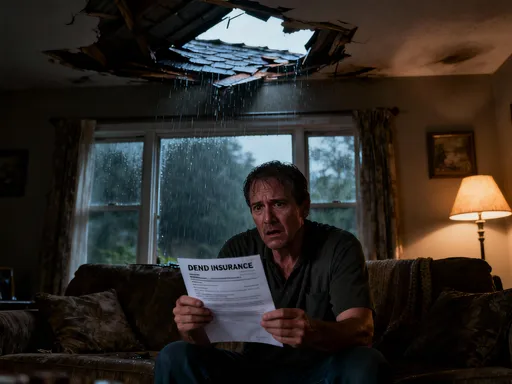
I Almost Lost My House Over This Home Insurance Mistake
You think you’re safe because you have home insurance—until disaster strikes and your claim gets denied. I learned this the hard way when a minor oversight turned my biggest asset into a financial nightmare. Home insurance isn’t just about paying premiums; it’s about understanding what you’re actually covered for. In this article, I’ll walk you through the hidden pitfalls most homeowners miss and how to truly protect your property before it’s too late. It’s not enough to assume your policy has your back—without clarity, even the most comprehensive-sounding plan can leave you exposed when it matters most. The difference between peace of mind and financial devastation often comes down to awareness, attention to detail, and proactive planning.
The False Sense of Security: Why Having Insurance Isn’t Enough
Many homeowners operate under the belief that purchasing a policy equates to complete protection. Once the documents are signed and the first premium paid, there’s a natural tendency to file the paperwork away and forget about it—until something goes wrong. But insurance is not a one-time transaction; it’s an ongoing agreement that hinges on mutual understanding between the policyholder and the insurer. Too often, people discover too late that their sense of security was built on assumptions rather than facts. A roof damaged during a severe storm may seem like a clear-cut case for coverage, yet insurers routinely deny such claims based on exclusions buried in the policy language. In my own experience, a windstorm caused significant shingle loss and water infiltration, but the claim was rejected due to what the adjuster called 'pre-existing wear and lack of maintenance.' I had no idea that routine deterioration—something inevitable in any home—could void my protection.
The core issue lies in the gap between perception and policy details. Most standard home insurance policies cover sudden and accidental damage, but they exclude gradual deterioration, wear and tear, or damage resulting from neglect. These exclusions are often written in dense legal language that's easy to overlook during the initial purchase process. For example, a slow kitchen ceiling leak caused by a deteriorating pipe joint might not be covered because it developed over months or years, even if the resulting mold or structural weakening causes thousands in damage. Similarly, a tree falling on your garage during a storm is typically covered—but only if the tree wasn’t already dead or diseased, which would imply poor yard maintenance. The burden of proof often falls on the homeowner to demonstrate that damage was unforeseeable and not the result of deferred upkeep.
This false sense of security is further reinforced by how policies are marketed. Brochures and agent summaries often emphasize broad protections—'covers fire, wind, theft'—without highlighting critical limitations. As a result, policyholders assume comprehensive coverage where it doesn’t exist. To combat this, homeowners must shift from passive acceptance to active engagement. That means reading the full policy document, not just the summary sheet, and asking specific questions about what’s excluded. It also means treating insurance as dynamic—something that should be reviewed annually, especially after major weather events, renovations, or changes in local risk factors. Awareness alone won’t prevent damage, but it empowers you to take preventive steps and avoid the shock of a denied claim when you need help most.
Underinsurance: The Silent Threat to Your Biggest Asset
One of the most dangerous—and common—mistakes homeowners make is underinsurance: carrying a policy limit that falls short of the actual cost to rebuild their home. Unlike market value, which reflects what a buyer might pay in the current real estate climate, the rebuild cost is determined by construction materials, labor rates, architectural complexity, and local building codes. These factors can vary significantly, and they change over time. After a fire destroyed a neighbor’s home, I was stunned to learn their $450,000 home was insured for only $320,000 in dwelling coverage. The shortfall meant they had to cover more than $130,000 out of pocket, even after their insurer paid the policy limit. This is not an isolated case—studies suggest that up to 30% of U.S. homes may be underinsured by 20% or more.
The reasons for underinsurance are varied but predictable. Many homeowners base their coverage on the mortgage amount or the purchase price of the home, neither of which accurately reflects reconstruction costs. Others fail to adjust their policy after inflation, supply chain disruptions, or regional labor shortages drive up building expenses. A kitchen remodel, an added deck, or even energy-efficient windows can increase the rebuild value, yet these improvements are rarely reported to insurers. Over time, the gap between coverage and actual cost widens, creating a ticking financial time bomb. When disaster strikes, the insurer pays only up to the policy limit, leaving the homeowner responsible for the difference. In high-cost areas, that gap can reach six figures, turning a recovery effort into a long-term debt burden.
Preventing underinsurance starts with accurate valuation. Homeowners should request a replacement cost estimate from their insurer or an independent appraiser, ideally every three to five years. This assessment should account for local construction costs per square foot, the quality of finishes, and any unique features such as custom cabinetry or stonework. Inflation guard endorsements—optional policy add-ons—can also help by automatically adjusting coverage limits annually to keep pace with rising costs. Additionally, it’s wise to inform your insurer of any major renovations, even if they don’t trigger a re-evaluation requirement. The goal is not to overpay for unnecessary coverage, but to ensure that your policy reflects the true cost of rebuilding your home to its current standard. This level of diligence transforms insurance from a vague safety net into a precise financial safeguard.
Overlooking Personal Property and Liability Gaps
While structural protection is essential, many homeowners neglect two other critical components of their policy: personal property coverage and liability protection. Personal property refers to the contents of your home—furniture, electronics, clothing, appliances, and valuables. Standard policies typically cover these items at 50% to 70% of the dwelling limit, but this may not be enough, especially in homes with high-end furnishings or extensive collections. When a fire damaged a friend’s home, they realized their $60,000 in electronics, artwork, and designer clothing far exceeded their $40,000 personal property limit. Without a detailed home inventory, they struggled to document losses and received only partial compensation. The emotional toll of losing irreplaceable items was compounded by the financial strain of replacing them out of pocket.
To avoid this, homeowners should conduct a thorough inventory of their belongings, ideally with photos, receipts, and estimated values stored in a secure cloud account. This not only supports claims but helps determine whether additional coverage is needed. For high-value items like jewelry, fine art, or musical instruments, scheduled personal property endorsements provide higher limits and more comprehensive protection. These riders cover depreciation and often include off-premises theft, which standard policies may exclude. Without them, a stolen laptop from a coffee shop or a damaged heirloom ring might not be fully reimbursed.
Equally important is liability coverage, which protects you if someone is injured on your property or you cause damage to someone else’s home. Standard policies typically offer $100,000 to $300,000 in liability limits, but medical costs and legal fees can quickly surpass these amounts. When a delivery person slipped on my icy front steps and required surgery, the resulting settlement approached $250,000. My base liability limit was $100,000—enough to trigger a lawsuit for the remaining balance. Increasing liability coverage through a personal umbrella policy is one of the most cost-effective ways to strengthen protection. For a few hundred dollars a year, umbrella policies can extend liability limits to $1 million or more, covering legal defense, medical expenses, and damages across home, auto, and other personal risks. Ignoring these gaps leaves your assets vulnerable, not just your home.
The Danger of Standard Policies in High-Risk Areas
If you live in a region prone to natural hazards—whether coastal flooding, wildfires, or earthquakes—a standard home insurance policy is unlikely to provide adequate protection. These risks are typically excluded from basic coverage, yet many homeowners assume otherwise. I learned this the hard way after heavy rains caused water to seep into my basement. I filed a claim, expecting reimbursement for cleanup and repairs, only to be told that 'flood-related damage' was not covered under my policy. I had to pay over $18,000 to restore the space, money I hadn’t budgeted for. Flood insurance requires a separate policy, often through the National Flood Insurance Program or private insurers, and must be purchased well in advance of storms—typically with a 30-day waiting period.
Similarly, homeowners in wildfire-prone regions may find their claims denied if the insurer determines that flammable debris or untrimmed trees contributed to the spread of fire. Some insurers in high-risk states have even stopped offering policies altogether, forcing residents to rely on state-run FAIR plans, which may offer more limited coverage. Earthquake damage is another major exclusion; in areas like the Pacific Northwest or along fault lines in the Midwest, a standalone earthquake policy is essential. These specialized policies cover structural damage, personal property loss, and sometimes additional living expenses if your home becomes uninhabitable.
The key to managing location-specific risks is awareness and preparation. Homeowners should consult flood maps, wildfire risk assessments, and geological surveys to understand their exposure. Local building departments can provide guidance on mitigation measures such as fire-resistant roofing, elevation requirements, or sump pump installations. Insurers often offer premium discounts for homes with storm shutters, reinforced foundations, or monitored alarm systems. By identifying your risks early and securing the right supplemental coverage, you turn insurance from a reactive tool into a proactive defense. Waiting until a storm is forecast or a fire is nearby is too late—protection must be in place before disaster strikes.
How Claims History and Credit Affect Your Protection
Your relationship with your insurer is influenced by more than just your policy terms—it’s also shaped by your claims history and credit-based insurance score. Filing a claim may seem like the logical response to damage, but insurers view frequent claims as a sign of higher risk, which can lead to increased premiums or even non-renewal. After I filed two water damage claims within three years—one from a burst pipe, another from roof leakage—I received a notice that my policy would not be renewed. While the incidents were weather-related and beyond my control, the pattern raised red flags. I had to shop for a new insurer at a significantly higher rate, losing years of loyalty discounts in the process.
To manage this risk, it’s wise to evaluate whether small repairs are worth filing a claim. As a rule of thumb, if the damage is less than your deductible or only slightly above it, paying out of pocket may preserve your claims-free status and long-term affordability. For example, a $1,200 repair when your deductible is $1,000 yields minimal reimbursement but still counts as a claim. Over time, maintaining a clean claims history can save thousands in premiums. That doesn’t mean avoiding legitimate claims—major events like fires, storms, or liability incidents should always be reported—but being strategic about minor issues can protect your financial standing with insurers.
Credit also plays a significant role in home insurance pricing. Most insurers use credit-based insurance scores—distinct from traditional credit scores—to assess the likelihood of future claims. Studies have shown that individuals with higher insurance scores tend to file fewer claims, so insurers reward them with lower premiums. Even if you pay your bills on time, factors like high credit utilization, frequent credit inquiries, or a short credit history can lower your score and increase your rates. Fortunately, improving your credit over time can lead to tangible savings. Paying down balances, avoiding new credit applications, and correcting errors on your report are all steps that can positively impact your insurance costs. Understanding this link empowers you to take control of more than just your finances—it directly influences your ability to afford reliable protection.
Cutting Costs the Right Way: Smart Savings Without Sacrificing Coverage
Home insurance premiums can be a significant household expense, and the desire to save money is understandable. However, not all cost-cutting strategies are created equal. Some common 'savings'—like reducing coverage after a renovation, skipping inflation adjustments, or choosing the lowest premium without comparing benefits—can backfire when a claim arises. True savings come from smart, sustainable choices that maintain strong protection while reducing costs. One of the most effective methods is bundling home and auto insurance with the same provider, which often yields discounts of 15% to 25%. Multi-policy discounts are widely available and require minimal effort to implement.
Another legitimate way to lower premiums is by increasing your deductible. Raising it from $500 to $1,000 can reduce your annual premium by 10% to 20%, depending on your insurer and location. However, this strategy only works if you have sufficient emergency savings to cover the higher out-of-pocket cost when a claim occurs. Without that cushion, a larger deductible could create financial strain when you need funds most. Similarly, installing safety and security features—such as smoke detectors, burglar alarms, fire sprinklers, or storm shutters—can qualify you for discounts ranging from 5% to 20%. These upgrades not only lower premiums but also reduce the likelihood of loss, creating a dual benefit.
Shopping around every few years is another proven way to save. Loyalty is valuable, but it shouldn’t prevent you from exploring better rates. Insurance markets fluctuate, and new competitors often enter regional markets with aggressive pricing. By obtaining quotes from three to four insurers every three to five years, you can ensure you’re not overpaying. Just be sure to compare coverage levels, not just prices—some policies may appear cheaper but offer lower limits or more exclusions. The goal is to achieve a balance: paying a fair price for comprehensive, reliable protection that won’t leave you exposed when disaster strikes.
Building a Proactive Defense: Turning Insurance Into Real Asset Preservation
Home insurance should not be a passive expense tucked into your monthly budget. To truly protect your most valuable asset, it must be treated as a dynamic, living component of your financial plan. This means regular reviews—at least annually—to ensure your coverage keeps pace with changes in your home, lifestyle, and external risks. A home office, a rental basement suite, or a new swimming pool can all affect your liability and coverage needs. Life events like marriage, retirement, or a child moving out may also warrant adjustments. By staying proactive, you avoid the trap of outdated protection that fails when tested.
Documentation is another cornerstone of effective insurance management. Keep a digital record of your home’s condition, including photos of each room, receipts for major purchases, and records of repairs and upgrades. This inventory supports claims and helps agents understand your needs during policy reviews. Working with a trusted, independent insurance agent—rather than a captive representative tied to one company—can also make a difference. Independent agents can compare multiple carriers, explain nuances in policy language, and advocate on your behalf during claims. They serve as a long-term partner in risk management, not just a transactional intermediary.
Finally, view insurance as part of a broader asset preservation strategy. It works alongside emergency savings, estate planning, and retirement accounts to create a resilient financial foundation. When managed wisely, it doesn’t just cover losses—it prevents financial collapse, protects your family’s future, and preserves the stability your home represents. The peace of mind that comes from knowing you’re truly covered is invaluable. It’s not about fearing disaster; it’s about being ready for it. By understanding your policy, closing coverage gaps, and managing your relationship with your insurer, you transform home insurance from a misunderstood necessity into a powerful tool for long-term security.